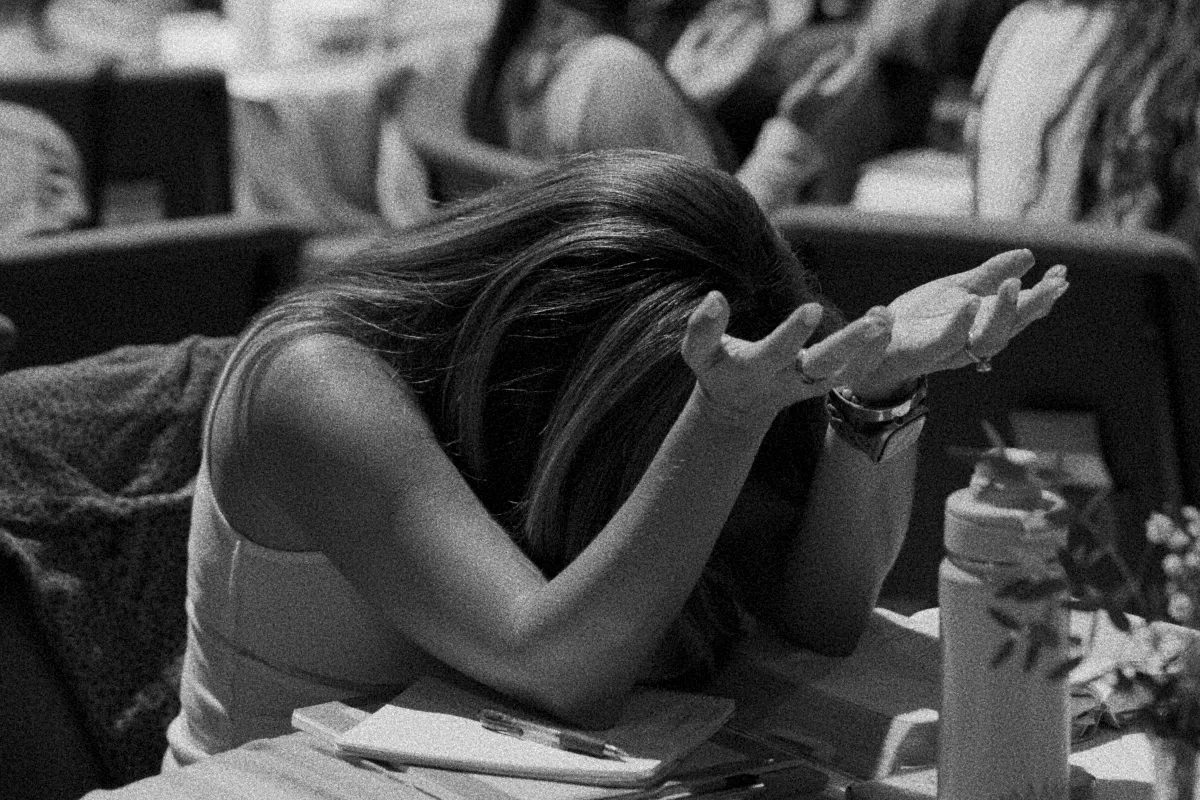
Where do you look when you feel powerless, outnumbered, overwhelmed, and entirely unsure what to do next?
For some, our eyes dart to escapist content or numbing distractions. We believe we will feel better if we just scroll, or read, or soothe our souls with something that takes our minds away from the reality in front of us.
For others, our eyes fixate on the obstacle itself. Unable to look away, we stare at it from every angle, examining its every possible move and consequence, until the obstacle grows far beyond its initial size.
Still others try to look around the problem. We seek to minimize its threat through a quick fix, certain that since the problem is external, the answer must be out there, too, if we can simply find it.
I've found myself trapped by some combination of all three in seasons of stress and fear. None of them has helped me right-size the actual obstacle, and none of them has helped me confront what's really in front of me.
In 2 Chronicles 20, King Jehoshaphat faces a truly terrifying scenario. Rival armies from three surrounding nations have rallied together against Judah and are now gathered nearby, at Engedi, just over the horizon. The situation is dire. The consequences are existential. The fear is crippling. And even though Jehoshaphat is a faithful and accomplished leader, he doesn't know what to do next.
So, he prays. And his prayer is one of my favorites from any leader recorded in Scripture. His concluding cry:
"We do not know what to do, but our eyes are on you." –2 Chronicles 20:12
Declarations of weakness like this are rare from leaders. “We do not know what to do” is not something we expect to hear from a king. Those words, spoken by a ruler or leader, would typically cause concern and panic. But not here, because in his weakness and fear, Jehoshaphat fixes his eyes and hope on the only One who does know what to do.
He doesn't frantically seek distractions or diversions. He doesn't try to minimize the enemy’s size. He doesn't desperately search for a quick diplomatic fix. Instead, he looks above the obstacle and beyond the armies. He fixes his eyes on God’s faithfulness and strength. And as he does this, Jehoshaphat’s weakness turns into tremendous strength.
Sometimes life puts us in situations where we have to be honest that we have no idea what to do next. And here’s the hardest truth: that admission alone doesn't spell defeat. Rather, it’s where we look next that determines the peace of our hearts and the flourishing of our souls.
If you find yourself overwhelmed by obstacles and don't know what to do next, pray along with King Jehoshaphat:
Lord, we do not know what to do. But our eyes are on you.
In our cry of weakness and our beholding of the only King who has true strength, there we will find the peace and courage to endure.
Want to dive deeper? Check out our sermon series guide on Kings of Judah, or watch the most recent sermon from our Kings of Judah sermon series.